Episode 49 – When growth creates disorder: scaling production in the middle of chaos
In episode 53 of Keru Podcast, we spoke with Óscar Necoechea, Production Director at Hisense Electrónica México, about the challenges of running a plant that assembles more than 36,000 TVs per day and that went from one million to ten million units per year in less than a decade. The interview is a masterclass in what it takes to scale without losing operational control, maintain quality in mass processes and lead teams in an environment where everything changes every week.
Read more about the episodeShow less
One of the central themes of the conversation was logistical complexity in electronics manufacturing, particularly in the context of Tijuana, where Hisense operates under the IMMEX program. Óscar explained in detail how the saturation of the port of Ensenada, the limited room for maneuver in temporary imports and the lack of safety stock can bring production to a complete halt. In his words: “Because of one screw that wasn't the right one, we had to postpone more than a thousand TVs. The problem wasn't the cost of the screw, but what we couldn't build because we didn't have it on time.”
The operation depends almost exclusively on Asian suppliers, especially Chinese ones, which means any deviation in the chain directly affects the production line. Added to this is the cultural and communication challenge with the design and management teams based in Asia: “80% of production problems have to do with information that didn't arrive or wasn't communicated on time.”
Another key point of the episode is Óscar's focus on developing industrial technical talent, a topic he considers critical for the future of the industry. “Today, newly graduated engineers arrive with knowledge but without experience. We have to be able to support them so that the learning curve is fast and meaningful.” That is why Hisense has implemented programs such as New Talent and agreements with technical high schools so that young people can work half shifts while they study.
Óscar stresses that one of the main challenges of leadership today is managing the generational clash between traditional executives and new generations who seek other formats, another language and another way of operating. “Training leaders isn't the hard part; the hard part is getting people to follow you. If they don't trust you, no amount of training is enough.”
The conversation also addressed the importance of digitalizing processes in a useful way, not just a cosmetic one. At his plant, they are implementing electronic dashboards that alert in real time when a unit is lost, who was responsible and which area needs to step in. They are building a system in which quality, maintenance and production can respond immediately based on data. “Digitalizing isn't about no longer using paper. It's about getting ahead with information so you don't repeat mistakes.”
In a more strategic part of the interview, Óscar discussed the impact of tariffs and the need for contingency plans. He acknowledged that the company was not prepared for the tariff increases and that the experience of having to halt shipments for days led him to ask: how do you keep a plant running in the face of a sudden economic crisis? The answer was not simple, but the importance of not depending entirely on a single supplier country and of strengthening internal capabilities became clear.
During the pandemic, Hisense did not stop operations. They implemented strict protocols, redesigned workstations, rebalanced lines and, hardest of all, convinced people to keep going responsibly. The result: 36% growth in production, with record indicators at the corporate level.
The episode closes with a phrase that sums up Óscar Necoechea's philosophy well: “After what we faced during the pandemic, every problem has a solution. What matters is having the mindset that it can be done.” And perhaps that is the biggest takeaway of the episode: it's not just about systems, dashboards and automation, but about people, communication and effective leadership. Because when a plant grows as fast as Óscar's, what really makes the difference is the ability to bring order to chaos without losing direction.
Keru Podcast, created by Globalita.io, is a series of conversations with industrial leaders from Latin America about management, technology and decision-making in complex environments.
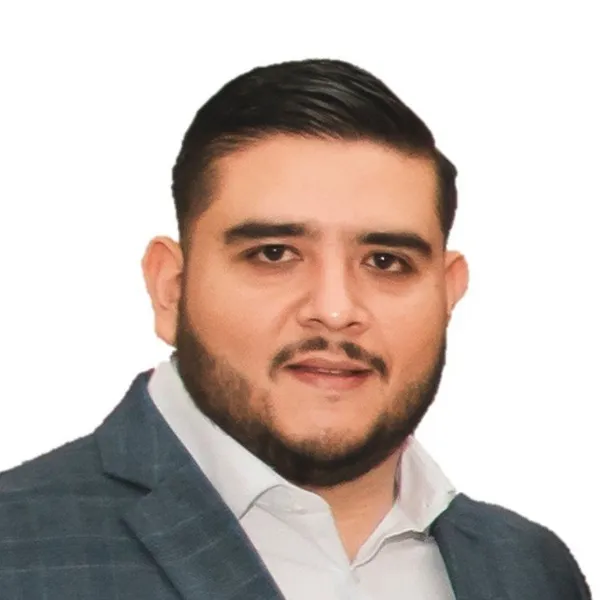
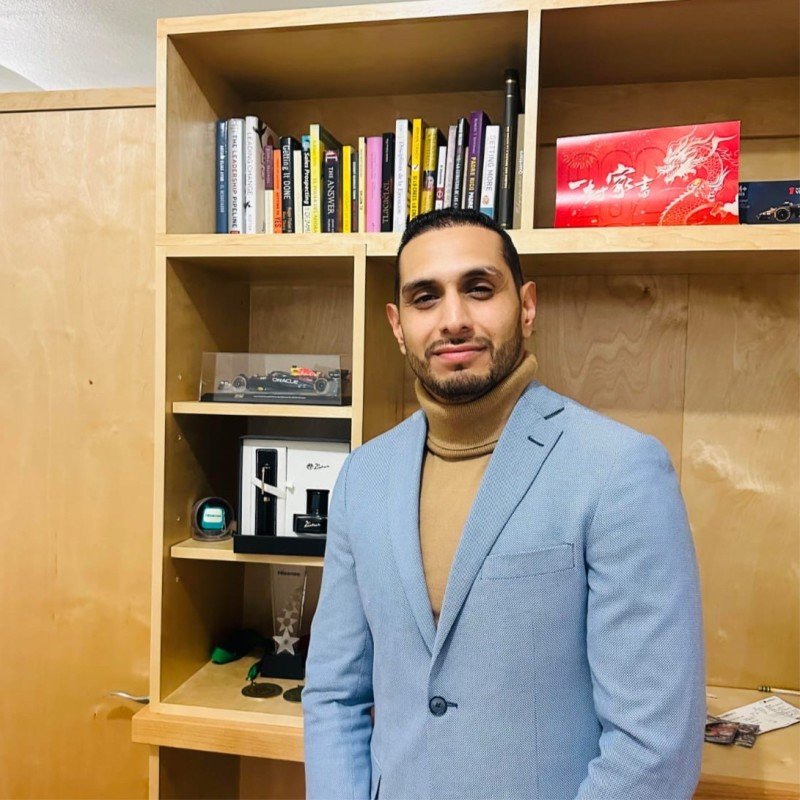
Óscar Necoechea Mexico
He is a professional with more than a decade of experience in the manufacturing industry, specializing in production management, technical leadership and continuous improvement. He currently serves as Production Director at Hisense Electrónica México, one of the group's most important plants worldwide, located in Tijuana, Baja California. In this role, he leads more than 3,500 people and coordinates production operations and building and equipment maintenance, in an environment of rapid growth and high demands.
A Mechatronics Engineer from the Universidad Tecnológica de Tijuana, Necoechea began his career in industrial testing laboratories, where he developed skills in quality control, physical analysis and process validation. He later joined the electronics manufacturing industry at companies such as Sharp and, for more than nine years, has been part of Hisense Electrónica México, where he has grown steadily: from junior engineer to Production Director, holding supervisory, management assistant and deputy director positions along the way.
During his time at the company, he led key projects such as the creation of the refurbish area, aimed at processing TVs returned from the market through an efficient restoration system. He was also instrumental in consolidating Hisense's industrial growth, which went from a capacity of one million to ten million TVs per year. This process involved not only an operational expansion, but also the installation of new subassembly and module lines, and the incorporation of processes such as plastic injection molding and automatic insertion.
Óscar Necoechea Hisense is known for a hands-on, results-oriented leadership style with an emphasis on developing multidisciplinary technical teams. He sees effective communication as a pillar of productivity and promotes the strategic use of digital technologies, artificial intelligence and predictive tools to improve traceability and real-time quality control. He has led digitalization initiatives in production dashboards, failure traceability and machinery monitoring on the plant floor.
Committed to training new generations, he drives programs such as New Talent to bring technical and university students into the industrial world. Under his leadership, more than 50 young people have been trained and hired as junior engineers, strengthening the link between practice and innovation.
Recognized for his ability to scale operations without losing the human perspective, Óscar promotes an industrial culture based on three pillars: user, engineering and process. His experience, which includes managing through critical times such as the pandemic and coordinating logistics under port restrictions, positions him as a strategic figure in electronics manufacturing in Mexico.
Production Director
Episode 49 · Keru Podcast
Articles by Oscar Necochea
We are writing an article; check back in a few days.