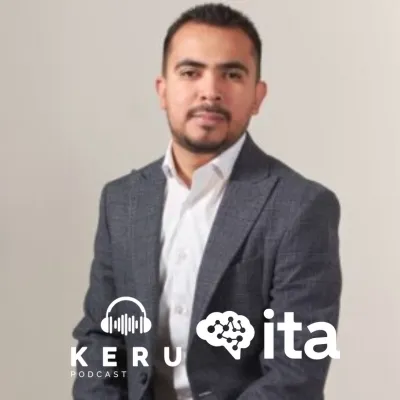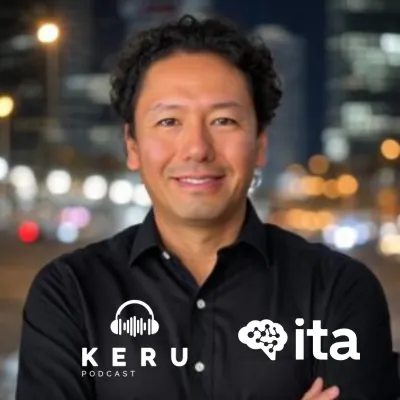
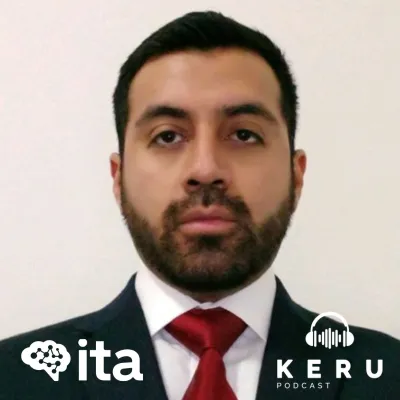
🔍 Article co-created with Ricardo Vázquez, Plant Manager at Trelleborg Mexico (🇲🇽 Mexico), and Augusto Unzaga, host of Keru Podcast.
🎙️ This article was inspired by Episode 31 of Keru Podcast.
Keru Podcast, created by Globalita.io, is a series of conversations (in Spanish) with industrial leaders from Latin America about management, technology and decision-making in complex environments.
Leadership as a silent bottleneck
In industries such as automotive and technical plastics, processes are so demanding that any mistake is costly. However, in many plants, mistakes don’t come from the line or the machine. They come from delays in decision-making.
“If the supervisor waits for me to validate everything, we’ve already lost speed,” says Ricardo Vázquez Mexico, who leads the operation at Trelleborg Mexico with a focus on real agility.
This is not about agility as a talking point, but as a daily practice: responding to the customer, adjusting with the supplier, releasing orders, correcting deviations… without running every step past general management.
Trelleborg Ricardo Vázquez: empowering without improvising
One of the common mistakes when trying to decentralize decisions is delegating without structure. That is why, at Trelleborg Mexico, the change started in the middle: strengthening middle managers.
“A leader who doesn’t develop their supervisors becomes an operational bottleneck.”
How did they solve it?
- By clearly defining who decides what at each level.
- By training with simulations of critical decisions.
- By applying the impact–urgency matrix to prioritize actions on the floor.
- By using visual boards so each leader knows which variable to watch.
This model reduces friction, adds speed and cuts down on errors caused by constant dependence.
Industrial leadership models applied to change
Instead of thinking of leadership as a personal style, the work focused on industrial leadership models that have already proven effective in similar contexts. Some key principles implemented on the plant floor:
- Planned Gemba Walks: management goes down to the floor, but with a clear agenda.
- “Obeya”-style leadership: short meetings, everyone standing, with visible data and a focus on decisions.
- Kaizen training: each leader is in charge of an improvement routine.
- Cross performance review: teams give their opinion on the effectiveness of technical leadership, not just the boss.
These practices are integrated into everyday work, not as “parallel projects”, but as part of the workflow.
Leading without being everywhere: the real change on the plant floor
The organizational culture change at Trelleborg Mexico did not happen overnight. Nor was it driven from a PowerPoint. It was forged on the plant floor, at the real pace of day-to-day work, where shifts overlap, orders double and problems arrive without warning.
Ricardo Vázquez Mexico puts it bluntly:
“If I have to be in every decision, then I don’t have leaders… I have assistants.”
This thinking was the starting point for building a model that combines speed with control. It is not about leading from chaos or letting go of the wheel, but about building a robust operating system for middle leadership, one that frees management to look further ahead.
1. The decision matrix: who decides what (and when)
One of the key tools implemented was an operational decision matrix, inspired by the Accountability Chart model from EOS (Entrepreneurial Operating System), adapted to the plant environment.
This matrix clearly establishes:
- Which type of decision belongs to which level.
- What information is needed to make it.
- What the maximum response time is.
Example:
- A change of supplier requires technical and managerial validation.
- An adjustment of machine parameters can be decided by the shift leader, if certain conditions are met.
- A production rescheduling can be authorized by the planning area with visibility of the backlog.
Result: more agility, fewer bottlenecks.
2. Visualize to act: plant management with a Lean approach
Following the principles of Lean Management, visual boards were implemented in every critical area. They bring together indicators, tasks for the day and alerts.
Some practices applied:
- A daily impact/effort matrix to decide which problems to tackle.
- Andon panels focused on stoppages, causes and resolution time.
- Color codes to define order priority.
- 15-minute meetings, 3 times a day, focused on immediate action.
“It’s not about showing numbers. It’s about making decisions with those numbers. That’s the leader’s role.”
3. Cross-training: every technician, a potential leader
One of the strongest pillars of the transformation at Trelleborg Ricardo Vázquez was redefining the role of the technician. Instead of being mere executors, they were prepared to:
- Understand critical process variables.
- Make decisions in the absence of supervision.
- Lead preventive maintenance routines.
- Take part in continuous improvement committees.
This was achieved with a training plan based on the TWI (Training Within Industry) methodology, adapted to the plant context:
- Structured step-by-step instructions.
- Soft skills training to communicate and escalate deviations.
- Practical assessments every 60 days.
“I don’t need everyone to be an engineer, but I do need everyone to understand the impact of what they do.”
4. Delegating without disconnecting: the role of management
Delegating does not mean washing your hands of things. That is why the leadership model at Trelleborg Mexico Ricardo Vázquez incorporates what they call review leadership:
- Every week, leaders present not only results, but the decisions they made and their rationale.
- Reflection tools such as the 5 Whys and the PDCA Cycle (Plan–Do–Check–Act) are used.
- Cases where people acted well… and where they acted badly are analyzed.
This practice reinforces autonomy, but with collective learning.
5. When the pace tightens: sustaining leadership during pressure peaks
One of the biggest challenges in maintaining industrial leadership models comes when operational pressure increases: deadlines, material shortages, absenteeism.
That is where the system shows whether it works.
At Trelleborg, they prepare for that with:
- Contingency drills.
- Backup roles already trained.
- Rapid decision protocols.
- Pre-established limits for tolerable deviations.
This allows them to sustain decision-making in production environments without falling into improvisation or excessive dependence on the manager.
6. What can an industrial manager apply tomorrow?
If you lead a plant and want to move toward a more agile and efficient leadership model, these are some steps you can apply starting tomorrow:
🔹 Decision matrix by level
Define who decides what. Eliminate gray areas. Formalize it.
🔹 Simple visual board per area
Make sure everyone knows what to look at, how often and what to do if something deviates.
🔹 Gemba round with a purpose
Don’t walk just for the sake of walking. Ask key questions, write down findings, define action.
🔹 Identify and develop latent leaders
Who on your team can take on more? What do they need to do it?
🔹 Simulate pressure
Prepare the team to decide under stress, not only in ideal environments.
Final reflection
Industrial leadership is not a matter of charisma or of being everywhere. It is a matter of system. Of creating conditions where others can decide well, quickly and with technical judgment.
“The worst thing that can happen to a leader is for everything to depend on them.”
At Trelleborg Mexico, Ricardo Vázquez Mexico understood that effective leadership is not about having all the answers, but about building teams capable of responding on their own when needed.
And you, as a manager:
Are you building a system… or accumulating dependence?
🔁 Keru is a podcast created by Globalita.io, where we talk with those who lead Latin American industry from the inside.
Ricardo Vázquez is Plant Manager at Trelleborg Mexico, with more than 20 years of experience in the automotive and technical plastics industries. Throughout his career he has led production, continuous improvement, quality and multicultural team leadership processes in highly regulated environments. His approach focuses on developing middle managers, plant efficiency under pressure and implementing agile leadership models in critical operations. Before Trelleborg, he held key positions at companies such as Hutchinson and Bridgestone. His profile combines technical process knowledge with the ability to build fast and reliable decision-making structures, adapted to the challenges of the industrial sector in Mexico.
View profile and episode →