
data-driven internal mobility - Internal HR Analytics platforms make it possible to detect role mismatches and optimize the distribution of human capital. A plant success story.
Internal HR Analytics platforms make it possible to detect role mismatches and optimize the distribution of human capital. A plant success story.
For years, internal mobility was an informal practice: an operator moved to another line based on the supervisor’s intuition, a technician was promoted for seniority, and an engineer was rotated because “they were needed somewhere else”. But in a highly demanding production environment, that is no longer enough.
Today, the companies that manage to align their human capabilities with the real demands of the operation do so through data-driven internal mobility. This means combining performance evaluation, contextual information, operational profiles and predictive analytics to make decisions that optimize intelligent organizational fit.
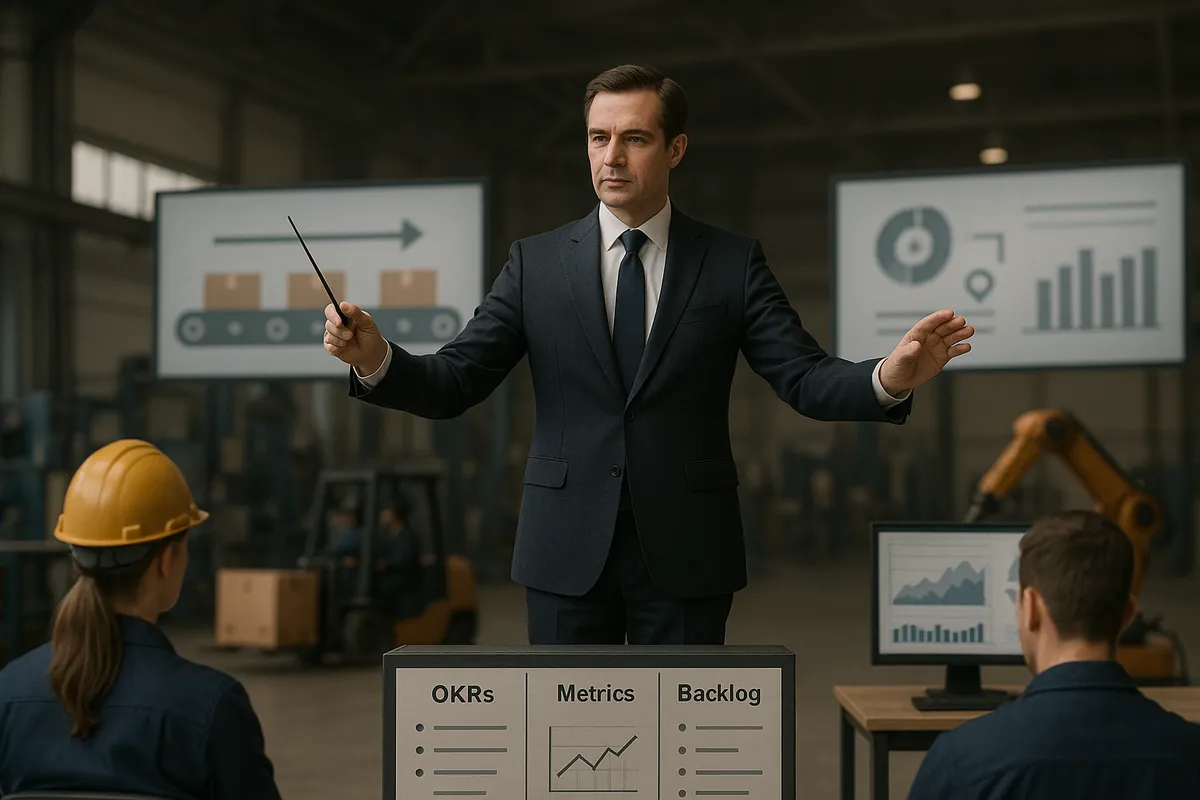
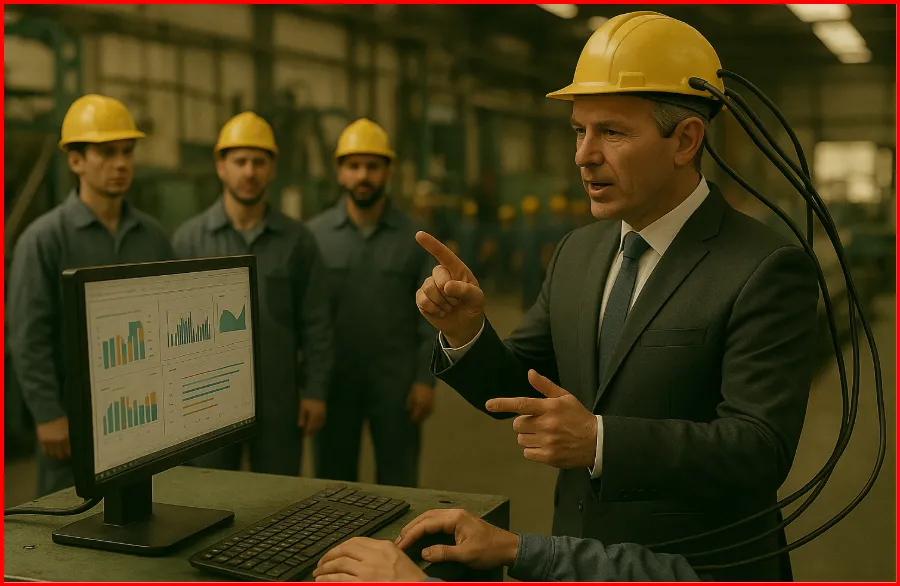
The differentiator lies in identifying role mismatch in production before it has an impact. This is not detected through isolated perceptions, but through HR Analytics in industrial plants: systems that cross-reference performance, turnover, ergonomics and behavioral compatibility data with the specific needs of each work cell.
These tools make it possible to redesign teams based on evidence, and to create processes of operational talent redistribution that raise performance without increasing pressure.
Data-driven internal mobility does not only improve indicators. It creates an environment where people better understand their role, feel a sense of purpose and find meaning in what they do. And that, beyond the numbers, transforms the plant from the inside.
Talking about data-driven internal mobility means accepting a fundamental premise: performance problems are not always individual; they are often structural. An operator who underperforms in one cell can be highly effective in another. A technician with low engagement may be in an environment that does not require their strengths. What is at stake is not just the person, but intelligent organizational fit.
In industrial contexts where every production line demands fine coordination, visibility and traceability, redistributing talent without disorder requires more than intuition. It requires HR Analytics in industrial plants: platforms designed to read patterns, anticipate friction and trigger rotation or relocation processes based on evidence.
Role mismatch in production: a costly failure
Role mismatch in production is one of the most invisible sources of waste. It shows up as downtime, reprocessing, demotivation, early turnover or avoidable accidents. But since it does not leave immediate visible traces, it is often not addressed as a priority.
In practice, this mismatch occurs when:
- A technical profile works on routine tasks without applying their expertise.
- Multitasking staff are assigned to operations that require specialization.
- Pressure is put on a supervisor with no training in team leadership.
- An operator is moved without clear criteria, simply based on availability.
These kinds of decisions, although common, have structural consequences. Because they alter the dynamics of the work cell, erode morale and reduce the overall efficiency of the system.
The challenge is to identify these situations before they escalate. And that is where data-driven internal mobility comes in, as a preventive system and not as a reactive patch.
Operational talent redistribution: how to do it without creating chaos
A well-executed operational talent redistribution can correct mismatches, empower the team and improve the plant’s overall performance. But poorly executed, it can create confusion, resistance and loss of trust.
To be effective, it must meet three principles:
- Shared diagnosis: teams must understand why a change is being proposed, and what data the decision is based on.
- Defined criteria: it is not enough to move people; you need objective criteria: performance, ergonomics, technical skills, turnover, work climate.
- Structural support: training, support from the cell leader, and feedback after the transition.
This process is strengthened when it is backed by an HR Analytics in industrial plants system that works as a radar, not as a recorder. A system that detects weak signals (such as a sustained drop in productivity) and warns about possible mismatches.
In addition, there should be a module with performance history, technical and cultural profiles, and the availability of positions or specific needs on other lines.
Intelligent organizational fit: when the person and the role align
The ultimate goal is not to move people around like chess pieces, but to achieve intelligent organizational fit. That is, a configuration where each person’s capabilities, motivations and work style match the demands and culture of their cell or area.
This concept has three layers:
- Technical fit: knowledge and experience are aligned with the required operation.
- Functional fit: the work style (pace, autonomy, interaction) matches the dynamics of the cell.
- Cultural fit: the employee’s personal values are compatible with those of the team and local leadership.
The most advanced HR Analytics in industrial plants platforms make it possible to map these three levels in an integrated way. Some even apply predictive models to suggest which moves could improve a cell’s performance, without the need to add new resources.
Technology, yes, but with plant floor participation
Implementing a data-driven internal mobility system cannot be a decision made by HR or general management disconnected from the floor. It must be integrated from the operation, with middle leaders who know their team, validate hypotheses and support the process.
This involves working with skills maps, performance sensors, historical records, behavioral observations and structured interviews. And combining hard data with expert judgment.
Some companies combine this logic with methodologies such as TWI (Training Within Industry) to standardize the evaluation and retraining process when a move takes place. Or they apply the RACI model to clarify responsibilities in the moves.
The key is for operational talent redistribution not to be a threat, but a strategic tool that everyone understands.
Final reflection: data doesn’t relocate people; the judgment that interprets it does
Data-driven internal mobility does not replace leadership. It strengthens it. Because it makes it possible to see patterns where there used to be intuition, and to act on solid grounds where there used to be improvisation.
But data does not make decisions. Data guides. What defines the success of this type of program is the ability of the manager or supervisor to interpret, communicate and sustain decisions over time. To build trust while moving people. To design new balances without breaking the previous ones.
Moving someone to a different place is not always promoting them. Sometimes it is setting them free. Or giving them the context to shine.
When that happens, the plant doesn’t just work better. It breathes differently.
Follow us on social media: LinkedIn and keep reading other articles