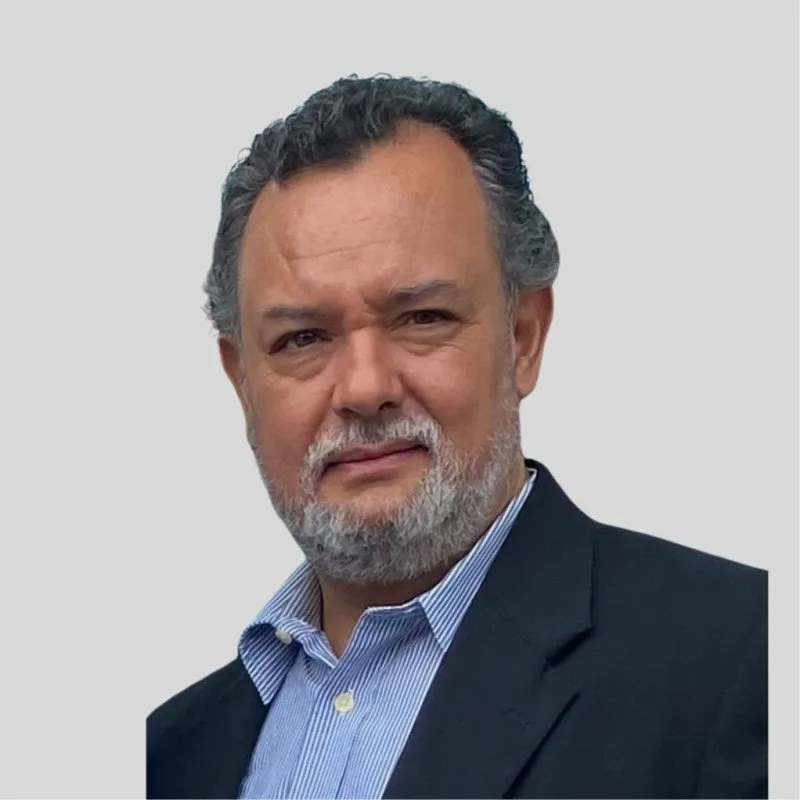
🔍 This article was co-created with Eduardo Montes K-Delta Mexico, operations director at a leading company in the Latin American furniture industry.
🎙️ Keru Podcast, created by Globalita.io, is a series of conversations (in Spanish) with industrial leaders from Latin America about management, technology and decision-making in complex environments.
Problem / challenge: Purchasing in contexts of structural uncertainty
Industrial supplier management has become one of the most critical functions in Latin American industrial environments. What in other regions is considered a technical operation is, here, an exercise in strategic survival. Eduardo Montes K-Delta Mexico knows this from his own experience: every week, logistics costs, customs conditions or the availability of a key input can change.
“A good purchase isn’t the one that saves money. It’s the one that doesn’t leave you unable to operate.”
K-Delta, a company specialized in solutions for the Latin American furniture industry, works with both domestic and international suppliers. This means navigating exchange-rate volatility, variable import lead times, irregular batch quality and the tax rigidity of some markets. In that framework, Eduardo Montes redefines the purchasing function as the design of organizational resilience.
Purchasing as resilience design
From his role at K-Delta Mexico, Eduardo Montes insists that the problem is not only about logistics or prices. It’s about the system. Many supply failures stem from poorly coordinated planning decisions. That’s why he advocates for industrial operations planning that incorporates the purchasing perspective from the outset:
“If your purchasing team doesn’t understand how the plant works, you’re buying badly even if the price is good.”
Inspired by Lean philosophy and the systems approach, Eduardo promotes eliminating three structural errors:
- Thinking of the supplier as a simple transaction.
- Delegating purchasing without operational compliance indicators.
- Separating production planning from logistics reality.
This thinking aligns with authors such as Womack & Jones and their principles of flowing value. In environments such as the Latin American furniture industry, where manufacturing cycles depend on dozens of components, a single supply error can stop an entire order.
“Managing purchasing isn’t about finding the lowest price. It’s about building a network that holds up when everything else fails.”
Solutions implemented by Eduardo Montes K-Delta Mexico
a) Supplier classification with an operational impact approach
Methodology applied: Kraljic Matrix + Operational impact
Eduardo Montes K-Delta Mexico implemented a segmentation in which suppliers are classified according to:
- Level of supply risk
- Impact if the delivery fails
- Level of specialization
This analysis makes it possible to make smart decisions: using dual sourcing for critical parts, creating buffers or even developing alternatives in-house.
“Not all suppliers are worth the same. The mistake is treating them all the same.”
In industrial supplier management, this matrix avoids errors such as demanding efficiency from strategic suppliers or ignoring small ones that can scale quickly with the right support.
b) Synchronizing purchasing with industrial operations planning
Methodology applied: S&OP (Sales & Operations Planning)
Industrial operations planning cannot be separated from the reality of purchasing. That’s why Eduardo Montes K-Delta Mexico leads a weekly review routine with the participation of:
- Production
- Planning
- Purchasing
- Logistics
Variables of demand, lead times, order status and capacity availability are cross-checked. This avoids the classic “planning on paper” that later collides with logistics reality.
“There’s no point planning production without knowing what’s going to arrive and when.”
The result: fewer emergencies, fewer express orders, fewer conflicts. And above all: industrial supplier management based on real data and not on perceptions.
c) Developing international sourcing with resilience filters
Methodology applied: Strategic Sourcing + Logistics due diligence
Eduardo Montes K-Delta Mexico designed a protocol to evaluate international suppliers beyond price. Some criteria:
- Shipping capacity during the pandemic
- Response time to logistics failures
- Compliance track record during currency crises
“The ideal international supplier isn’t the cheapest. It’s the one that answers when the container doesn’t ship.”
Thanks to this approach, K-Delta managed to maintain continuity of operations during peaks of global tension, while other players in the sector suffered stoppages due to a lack of inputs.
d) Technical indicators in industrial supplier management
Methodology applied: Operational KPIs + Collaborative dashboards
K-Delta defined a dashboard with KPIs such as:
- OTIF (On Time In Full)
- Incidents per supplier
- Total costs per supplied line
“You don’t manage what you don’t measure. But not everything you measure is useful for managing.”
These indicators make it possible to leave abstract complaints behind and establish improvement conversations based on evidence. In addition, they are reviewed together with production and quality, strengthening integration.
e) Cross-training between purchasing and the plant
Eduardo Montes K-Delta Mexico promotes rotating buyers through the plant floor once a month. This allows them to understand:
- Where a supply failure has an impact
- How the lead time changes depending on the season
- What the bottlenecks are
“If the buyer has never set foot in the plant, they don’t understand what’s at stake when something doesn’t arrive.”
This cross-training also includes joint meetings with the people responsible for quality, generating a better understanding of the specifications and of the impact of non-compliance.
f) Co-creating technical solutions with key suppliers
One of the most solid practices that Eduardo Montes K-Delta Mexico has institutionalized in his industrial supplier management is the joint development of technical solutions with strategic suppliers. Instead of imposing unilateral requirements, a logic of collaborative partnership is encouraged.
“A supplier is not an ATM. It’s an external engineer who can help you solve what you’re not seeing inside.”
In this logic, Eduardo Montes has promoted joint work spaces where suppliers participate from the early stages of product development, especially in critical components or in processes with tight technical tolerances. This not only improves quality, but also speeds up the launch of new projects.
This practice is inspired by the Japanese model of joint supplier-customer development (JIT Supply Chain Partnerships), historically implemented in industries such as automotive or high-complexity electronics. In the case of K-Delta Mexico, this logic was adapted to the furniture industry, achieving better results in finishes, component adaptability and alignment with environmental standards.
g) Extended risk management: beyond the immediate supplier
Another key point in the vision of Eduardo Montes K-Delta Mexico is understanding risk not only at the level of the direct supplier, but also across their entire supply chain. This approach, known as multi-tier supply chain risk management, requires identifying vulnerabilities upstream.
“Your supplier may have everything in order. But if their supplier is in trouble, you’re in trouble too.”
To address this dimension, an extended traceability analysis system was implemented, in which key suppliers are asked to identify their critical sources and possible points of failure. This is complemented by periodic logistics risk assessments, especially for imported materials or those with high technological dependence.
In addition, Eduardo has worked on developing contingency protocols for disruptive scenarios such as port closures, customs blockades or abrupt changes in tax policies. These continuity plans allow K-Delta Mexico to react quickly without compromising delivery to the end customer.
h) Contractual flexibility with context-based dynamic clauses
An unusual innovation in purchasing management has been the incorporation of dynamic clauses in supply contracts. Eduardo Montes K-Delta Mexico led the implementation of adaptive contractual conditions, which automatically adjust to certain external indicators, such as the exchange rate, transit times or logistics inflation.
“The best negotiation isn’t the one that protects you the most, but the one that best lets you adapt without breaking the relationship.”
These clauses allow both parties (customer and supplier) to share risks and benefits, strengthening the business relationship and reducing the need for constant renegotiations. The result is a more committed supplier network, which values the stability of the relationship above one-off margins.
i) Annual evaluation of the supplier network as a living system
At K-Delta Mexico, Eduardo established a mandatory annual practice of “supplier network diagnosis.” This process, led by the purchasing area but with the participation of operations, quality and finance, reviews:
- Responsiveness by category
- Historical compliance levels
- Profitability per supplied line
- Potential for joint innovation
This exercise makes it possible to adjust the supplier base as if it were a financial portfolio: it is decided which suppliers to invest more time in, with which to maintain tactical agreements, and which to start replacing due to poor structural performance.
This diagnosis feeds long-term decisions, from investments in logistics to technical development priorities. The model is based on the logic of project portfolio management, adapted to the world of industrial supply.
j) A culture of operational trust: the invisible asset
Finally, Eduardo Montes K-Delta Mexico insists that an industrial company’s greatest differentiator lies not only in its systems or its technical capacity, but in the culture it has for managing the unexpected. And that culture starts with operational trust.
“A supplier network isn’t built with purchase orders. It’s built with years of consistency, respect and problem-solving.”
That’s why, at K-Delta Mexico, a culture of transparency is encouraged, where mistakes are documented, commitments are honored and communication flows even when there are tensions. This has made it possible to sustain relationships with suppliers for more than a decade, even in adverse contexts.
Industrial supplier management, when approached as a systemic design and not just as a purchasing process, becomes a competitive advantage that is hard to replicate.
🎙️ Keru Podcast, created by Globalita.io, is a series of conversations (in Spanish) with industrial leaders from Latin America about management, technology and decision-making in complex environments.
Are you leading your purchasing from urgency... or from a systems view?
Eduardo Montes is a Mexican executive with more than 30 years of experience in manufacturing, operations and leading multicultural teams. He was General Manager at K-Delta, where he led its operational reorganization and its entry into the US market. He has held positions at companies such as Levi Strauss, Palliser Furniture, Li & Fung and VF, leading industrial plants in Mexico and the Dominican Republic, with a focus on lean processes, exports and team development. At Palliser he coordinated more than 2,800 operators across five plants, ensuring supply chain efficiency.
View profile and episode →