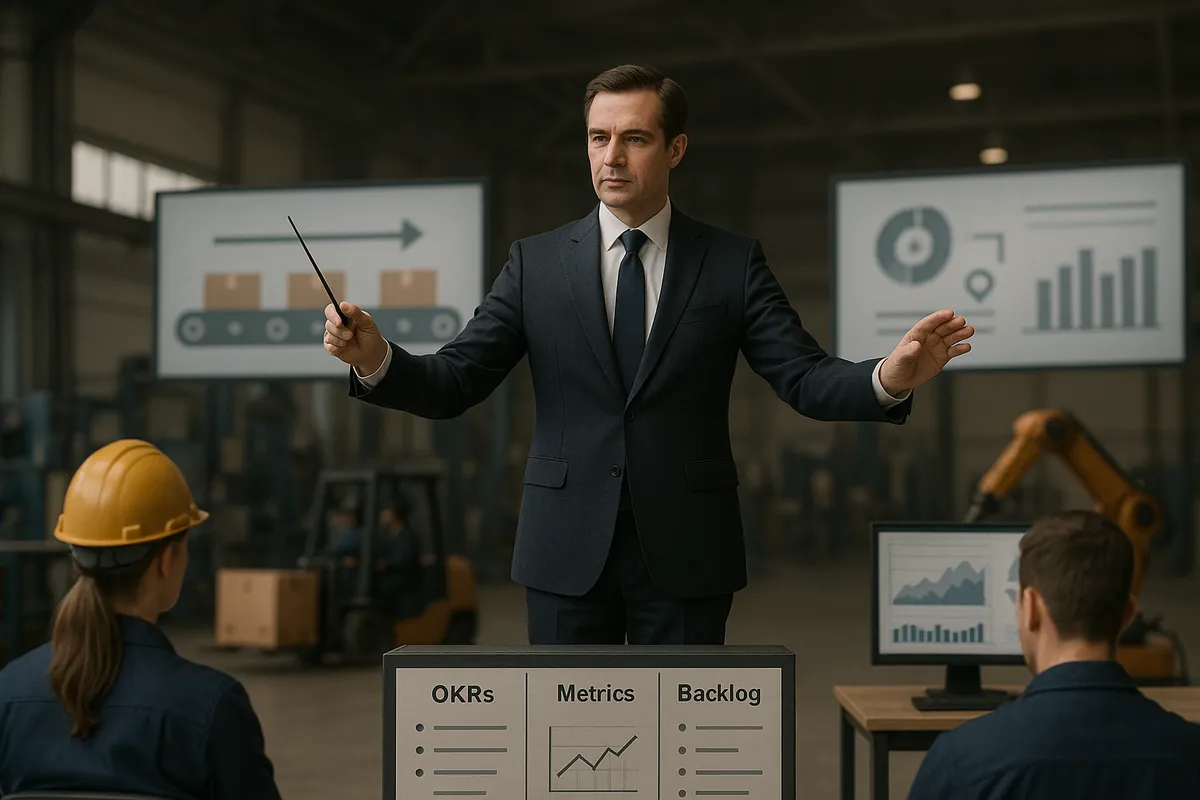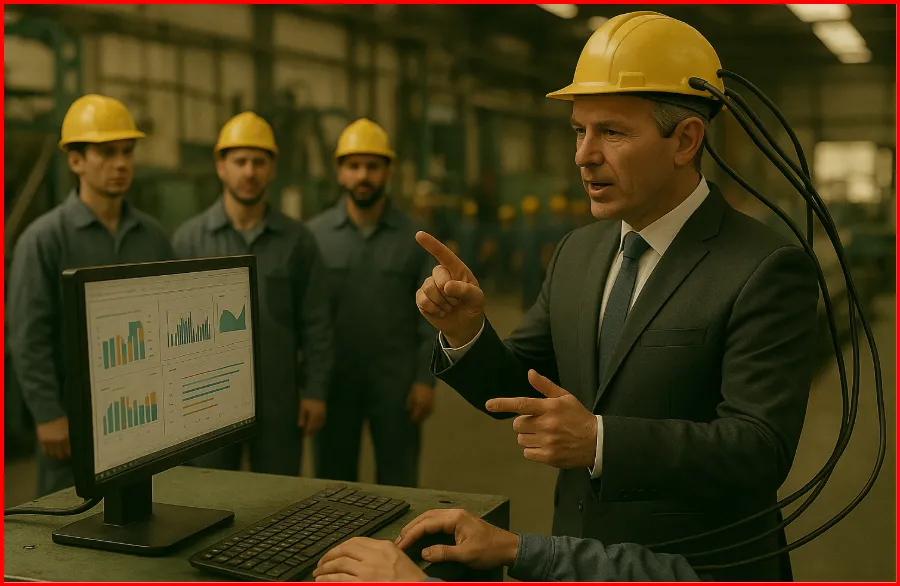


We explore how integrated platforms, from WMS to TMS and BI, transformed logistics into a strategic pillar of the business and made Smart logistics possible.
🔗 This article was inspired by the interview with Mauricio Lipscher on Keru Podcast.
View the interviewee’s profile →
For years, logistics was seen as a “cost center,” an area in charge of moving, storing and shipping. It had no access to the core of decision-making and was not considered part of the strategic design of the operation. This view was born of a technological limitation: without platforms connected in real time, logistics was, in essence, a delayed accounting function.
Everything changed when integrated logistics platforms began connecting the warehouse, transportation and planning with the rest of the business. What used to be physical movement is today also data processing. And what used to be analyzed in hindsight can now be anticipated.
“You can’t ask logistics to think strategically if you don’t give it real-time visibility,” many operations managers repeat. Technology changed that equation.
From reactive operation to systemic coordination
In most industrial SMEs in Latin America, the first logistics management systems were spreadsheets. Then came the ERP accounting modules, which made it possible to see stock levels or issue delivery notes, but with delayed information and no connection to production or transportation.
The arrival of tools such as WMS and TMS in industrial operations made it possible, for the first time, to make the logistics flow visible as a system in its own right. A WMS (Warehouse Management System) manages layout, turnover, picking and inventory traceability in real time. A TMS (Transportation Management System), for its part, organizes loads, routes, vehicle availability and delivery costs.
But the real transformation happens when both systems are integrated —either natively or through a centralized ERP— and are fed with data from IoT sensors, GPS, scanners or planning tools. The result: smart logistics, capable of making decisions coordinated with purchasing, production and sales.
Smart logistics is the ability to orchestrate the physical flow of materials through data connected in real time with multiple business systems.
What happens when that integration doesn’t exist?
- Inventory is in transit, but nobody knows where.
- An order is delayed, but it isn’t detected until the customer complains.
- The warehouse is full, but the urgent items ended up at the back.
- Production is planned without knowing whether space or transportation is available.
These errors are not human failures. They are the result of operating without visibility. And visibility can only be achieved when logistics stops being an appendix and becomes a connected platform.
Once logistics becomes visible, what follows is inevitable: it becomes influential. Having real-time data not only makes it possible to make better logistics decisions, it transforms how production is planned, how efficiency is measured and how customers are served.
The key step is not just having a WMS or a TMS, but integrating them into a broader system of integrated logistics platforms, where data flows with a network logic rather than through silos.
An integrated logistics platform is one that connects inventory, transportation, purchasing, production and sales in real time, through interoperable technology layers.
WMS and TMS as the foundation of a new way of making decisions
When the WMS is no longer isolated from the commercial system, it can anticipate demand peaks and reorganize the picking layout. When the TMS is connected to production, it can optimize loads from the very moment a work order is released.
And when both are fed by business intelligence —with operational KPI dashboards, automated alerts and simulated scenarios— logistics stops being merely operational and takes on a design function.
Some real examples:
- Case 1: A food company that used its TMS to detect delivery zones with greater climate variability, adjusting buffers and stock levels at each distribution point.
- Case 2: A metalworking company that connected its WMS to its sales module and managed to reduce incomplete orders by 40% caused by inputs that were physically on hand but not visible.
In both cases, the key was not the tool but the integration. Decisions stopped depending on “what we see in the warehouse” and began to come from systems that correlate information from multiple areas.
How is this leap supported with recognized methodologies?
This is where reference frameworks help bring order and logic to implementation. One of the most valuable is the SCOR model in supply chain, developed by APICS.
The SCOR (Supply Chain Operations Reference) model is a methodological framework that structures the entire supply chain into five key processes: Plan, Source, Make, Deliver and Return.
Applied to logistics, it makes it possible to:
- Establish metrics comparable with other companies in the sector.
- Diagnose bottlenecks in the delivery process.
- Design dashboards aligned with international standards.
- Measure logistics efficiency beyond cost (service level, reliability, flexibility, etc.).
For example, under SCOR, logistics is measured not only by “cost per delivery,” but also by perfect order reliability, total fulfillment cycle time or agility in the face of unexpected changes.
Combined with Lean Logistics practices, many companies have redesigned their logistics operations to:
- Reduce unnecessary movements in the warehouse.
- Eliminate overprocessing such as double physical validation.
- Establish “pull” flows from the customer to the factory.
In short, smart logistics relies on technology, but is validated with methodology.
Culture: the great bottleneck
Despite the tools available, many companies still operate with 1990s logic:
- The logistics manager is the last to find out about a sales peak.
- Delivery routes are assigned on paper or based on past experience.
- Critical inventory is neither geolocated nor prioritized.
- Planning is done without taking into account the availability of physical space or vehicles.
These practices are not due to ignorance, but to inherited structures. That is why the transformation toward integrated logistics platforms needs to be accompanied by a cultural change.
Changing the software without changing the culture only digitizes inefficiency.
Three decisions that mark the leap to smart logistics
- Design logistics around flow, not cost.
That is: understand cost as a result, not as a starting point. The design should seek fluidity, visibility and responsiveness. - Invest in interoperability.
Adding tools is pointless if they aren’t connected. An isolated WMS is better than Excel, but it is far from having an impact if it doesn’t communicate with production, purchasing and transportation. - Redefine the indicators.
Replace “daily shipments” with “perfect orders”; “delivery time” with “reaction capacity”; “average stock” with “service level per critical SKU.”
📲 Follow us on LinkedIn: Globalita and Keru Podcast
Final reflection: from functional logistics to thinking logistics
Logistics is no longer an appendix that is activated at the end of the process. Today it is a connected brain that feeds commercial decisions, defines production priorities and protects the customer experience.
A smart logistics system is not just more efficient: it is more aware. It makes it possible to anticipate, redesign, learn and propose.
If your logistics is still measured only in kilometers and costs, you may be leaving out the most important thing: its ability to think together with the business.