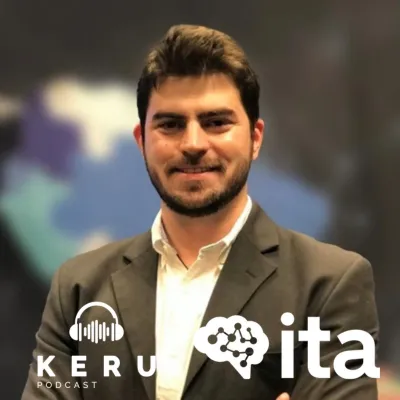
🔍 Article co-created with Germán Pinilla Chile, CEO at Pharmagroup Chile (🇨🇱 Chile), and Augusto Unzaga, host of Keru Podcast.
🎙️ This article was inspired by Episode 15 of Keru Podcast.
Keru Podcast, created by Globalita.io, is a series of conversations (in Spanish) with industrial leaders from Latin America about management, technology and decision-making in complex environments.
Rigor as a starting point: production under non-negotiable standards
In very few industrial sectors is the margin for error as low as in pharmaceuticals. Every decision, every process, every batch has direct consequences for human health. That is why operations management in the pharmaceutical industry demands a particular kind of leadership: one that combines technical rigor, documentation discipline and a systemic vision.
Germán, who leads operations at Pharmagroup Chile, puts it directly:
“In this industry you can’t improvise. Every procedure exists for a reason, and every omission can escalate to a public health level or severely impact the business result.”
This statement sums up the core of the operational challenge. In other sectors, deviations translate into rework or economic losses. In the pharmaceutical world, they can mean regulatory sanctions, product recalls from the market or, worse still, impacts on public health. That is why regulatory compliance is not an isolated function: it is the backbone of the entire organization.
At Pharmagroup Chile, Germán drove a complete review of the standard operating procedures (SOPs), making sure each one was aligned with the requirements of Chile’s Institute of Public Health (ISP) and with the practices recommended by the WHO. This review was not a documentation exercise: it was a tool to reduce ambiguity, prevent errors and reinforce the culture of compliance.
This approach is aligned with the principles of CGMP (current Good Manufacturing Practices), a mandatory methodology in the pharmaceutical industry that ensures each product is consistently manufactured and controlled according to quality standards appropriate for its intended use.
“Complying is not filling out forms. Complying is guaranteeing that what we produce is safe, effective and traceable. The whole system revolves around that.”
Efficiency without shortcuts: producing well, fast and in compliance
One of the central challenges in operations management in the pharmaceutical industry is achieving operational efficiency without violating standards. In many cases, the pressure to speed up processes or reduce costs can tempt some companies to relax controls. But that option, in regulated environments, is not only risky: it is unsustainable.
Pharmagroup faced this tension structurally. It knew the model had to be optimized, but without altering the essentials. Its approach was to apply productivity tools that respected the regulatory framework and to review the efficiency of its organizational structure. This translated, for example, into:
- Reorganizing the administrative structure and separating responsibilities
- Implementing control and monitoring tools
- Redefining standard operating and management times
These actions, taken from the Lean Manufacturing approach, not only did not compromise quality: they improved it.
“Efficiency isn’t about going faster. It’s about doing what is necessary, doing it well, and without useless steps.”
This operational thinking also responds to a cultural change. Many teams see regulatory compliance as a brake when, in reality, if well implemented, it can be a lever for efficiency. The key is to design processes that integrate the standard from the start, not as a later step.
At Pharmagroup, Germán promoted the creation of multidisciplinary cells: small teams that included quality, production, maintenance and validation, working together from the design of each new line. This structure replicated the logic of the Japanese Obeya model, where decisions are made based on real data and in a coordinated way.
Installed capacity vs. available capacity: the challenge of planning in pharma
In pharmaceutical plants, not everything that looks like capacity really is. Rooms must meet environmental requirements, equipment must be validated for each product, and operators must be trained for specific tasks. This means that a line that is physically available may not be legally or technically ready. And that is where one of the sector’s biggest headaches appears: the gap between installed capacity and available capacity.
“We had machines, but we didn’t have validated batches for those machines. And that creates silent bottlenecks.”
Germán identified this situation as a constant source of inefficiency. The solution he drove was the creation of a cross-functional operational planning system that included physical capacity, regulatory constraints, certified human resources and production backlog.
The result was a single dashboard that showed not only what could be produced, but what was authorized to be produced. This logic was inspired by the S&OP (Sales and Operations Planning) methodology, adapted to regulated environments. In addition, control layers from Six Sigma were added, especially the Measure phase, to understand where invisible capacity losses were being generated.
“It’s not that machines are missing. It’s that the data to make good use of the ones you have is missing.”
This approach made it possible to improve on-time delivery without the need for new investments. Just aligning information, real capabilities and decision criteria. A cultural and technical change that had a direct impact on the overall efficiency of the system.
Regulated culture: training to comply without relying on fear
One of the greatest risks in regulated environments is that compliance is sustained solely by fear of an external sanction. That culture, although functional in the short term, generates mechanical behaviors, little initiative and excessive delegation of responsibility to the quality area. For Germán, the goal was different: to build an autonomous, informed and proactive culture of compliance.
“A pharmaceutical company can’t work only because someone is watching. It has to work well when no one is watching.”
At Pharmagroup Chile, Germán implemented an internal training program structured in three layers:
- Shared technical foundation: all workers, regardless of their area, had to understand the fundamental principles of the drug life cycle, traceability, validation and the consequences of a deviation.
- Role-specific training: each function had standardized procedures (SOPs) and practical sessions on what was expected in real situations.
- Improvement culture: the opening of internal non-conformities without punishment was encouraged, as a way to detect failures before they escalate.
This model is inspired by the TWI (Training Within Industry) methodology, which promotes short, sequential training focused on the “what, how and why” of each task. Unlike other industries, here the “why” is vital: if an operator doesn’t understand the regulatory impact of a step, they are more likely to skip it.
“When you understand the impact of your work, you comply without being asked. And that is the point where quality becomes sustainable.”
Operational stability with multiple products: management in multipurpose plants - Germán Pinilla Pharmagroup
Mid-sized pharmaceutical plants, such as Pharmagroup Chile, usually operate as multiproduct facilities: they manufacture different medicines in the same facilities, adjusting lines, staff and shifts according to demand. This versatility is a commercial advantage, but it represents extremely high operational complexity.
Each product changeover requires:
- Deep, validated cleaning
- Format changes on filling and packaging lines.
- Specific training for the team that will carry out the process.
All of this, in contexts of high regulatory demands. According to Germán, one of the main management mistakes is underestimating the operational load involved in each product changeover:
“Each changeover isn’t just a cleaning. It’s a new validation. And if you don’t plan it well, you lose two days for every unnecessary changeover.”
To reduce this friction, Germán promotes SMED (Single Minute Exchange of Die) tools adapted to the pharmaceutical context. Although a batch cannot be changed in single-digit minutes, key principles are applied: external preparation of materials, smart sequencing and visual design of critical steps.
This makes it possible to reduce the average product changeover time by 25%, without compromising compliance. In turn, weekly planning is improved: products were grouped into compatible families, avoiding unnecessary changeovers and distributing the cleaning load evenly across shifts.
This optimization not only improves internal indicators: it makes it possible to increase the plant’s real availability and reduce staff turnover. When the team feels that the system is organized, it responds better. And in regulated industries, human stability is as important as technical stability.
Pharmaceutical regulatory compliance in Latin America: a challenging context, local responses
In Latin America, complying with international regulatory standards requires much more than applying a global manual. Pharmaceutical plants face technology gaps, a shortage of qualified staff, instability in the supply of raw materials and local regulations in constant evolution.
Germán was clear about this:
“What works in Germany doesn’t necessarily work in Santiago. You have to localize compliance, without lowering the standard.”
That process of “localization” is not informality: it is technical adaptation. For example, when automated environmental monitoring systems were not available, manual routines with double verification and physical alert systems were established. When external audits required digital traceability, hybrid forms and semi-automatic data entry were developed.
This approach is inspired by the logic of Lean Compliance, a philosophy that seeks to comply with the standard without bureaucratizing. The key is to apply local operational intelligence to maintain the global standard.
In addition, Germán promoted the creation of networks with other plants in the sector to share best practices. This generated active benchmarking, exchange of formats and even early warnings about regulatory changes. This collaborative logic is especially useful in the context of pharmaceutical regulatory compliance in Latin America, where information does not always flow from the authorities in a structured way.
“In this industry, compliance is only possible if we share. If each plant operates as an island, it’s only a matter of time before it fails.”
Leading with meaning: the role of the general manager in the pharmaceutical industry
In an environment of high technical, legal and social demands, the general manager cannot limit themselves to financial results. They must be the guarantor of the standard, the facilitator of the culture and the articulator of the operational purpose. Germán understands it this way:
“Our job is to keep the urgent from making us forget the important. Because in pharma, the important thing is always the patient.”
This approach also implies taking on the role of internal translator. The manager must be able to turn regulatory requirements into clear operational decisions. And at the same time, they must translate plant problems into priorities that directors or shareholders can understand.
In his management at Pharmagroup Chile, Germán takes an active part in training, leads audits and participates in every redefinition of a critical process. His presence is not decorative: it sets an example. And in environments where every failure can escalate to a national level, that makes the difference.
🔁 Keru is a podcast created by Globalita.io, where we talk with those who lead Latin American industry from the inside.
Does your plant comply because it must… or because it knows why it must?
Germán Pinilla Valenzuela Pharmagroup S.A. in Chile, leading the growth strategy, new business development and operational transformation within the pharmaceutical industry. With more than 20 years of experience in production, quality, plant leadership and executive management, he has built a career focused on operational excellence, regulatory compliance and sustainable expansion in complex and highly regulated markets.
View profile and episode →